7 Best Rubber Plant Varieties to Collect
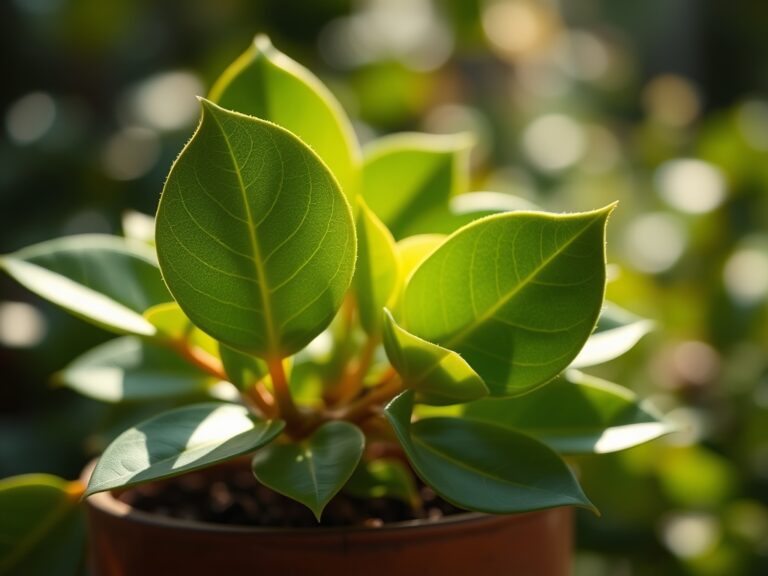
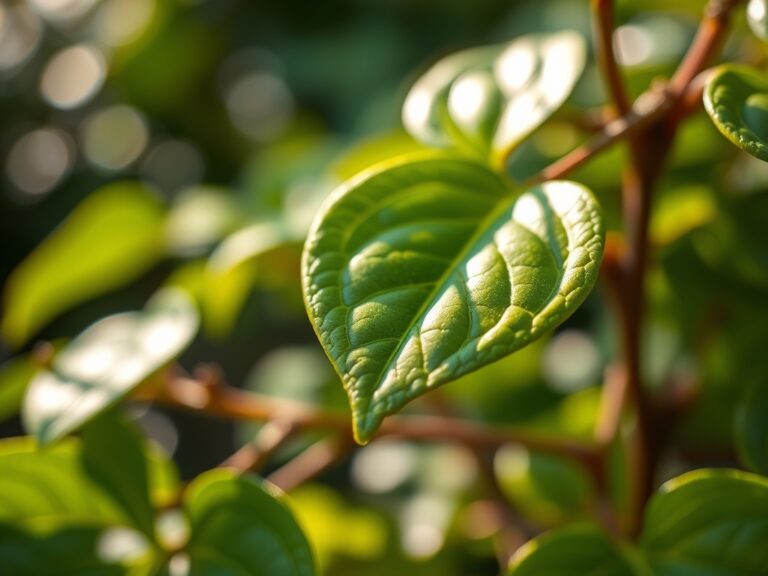
The waxy leaves of rubber plants catch afternoon light like polished leather, each variety expressing a unique pattern of cream, burgundy, or forest green across its foliage. Collectors prize these cultivars not merely for aesthetics but for their physiological adaptations to low-light environments and tolerance of irregular watering. The best rubber plant varieties offer distinct morphological traits, from compact growth habits to dramatic variegation patterns that result from controlled auxin distribution and anthocyanin expression. Ficus elastica has been cultivated since the Victorian era, when specimens stood sentinel in drafty parlors, proving their resilience across temperature fluctuations that would devastate more delicate tropicals.
Materials
Rubber plants thrive in a substrate with pH 6.0 to 7.0, slightly acidic to neutral. Use a potting mix containing 40% peat moss or coir, 30% perlite, 20% composted bark, and 10% worm castings to achieve adequate cation exchange capacity. Incorporate a balanced 4-4-4 organic fertilizer at planting, which provides slow-release nitrogen for leaf development, phosphorus for root establishment, and potassium for cellular integrity.
For established plants, apply 5-5-5 liquid fertilizer diluted to half strength every four weeks during active growth. Containers require drainage holes and terracotta or ceramic construction to prevent waterlogged conditions. A 10-inch pot suits plants up to 24 inches tall; increase pot diameter by 2 inches for every 12 inches of additional height.
Mycorrhizal fungi inoculants at transplant improve nutrient uptake efficiency by 30 to 40 percent. Mix 1 tablespoon of inoculant per gallon of substrate before potting.
Timing
Rubber plants grow year-round indoors but show accelerated growth from April through September in Zones 10 through 12. In Zones 8 and 9, move containers outdoors after the last frost date, typically mid-April. Return plants indoors when nighttime temperatures fall below 50 degrees Fahrenheit, usually by mid-October.
Transplant during early spring before the primary growth flush. Root disturbance during dormancy (November through February) extends recovery time by three to four weeks. Propagate through stem cuttings in May or June when auxin levels peak and rooting hormone application yields 85% success rates within 21 days.
Phases

Sowing and Propagation
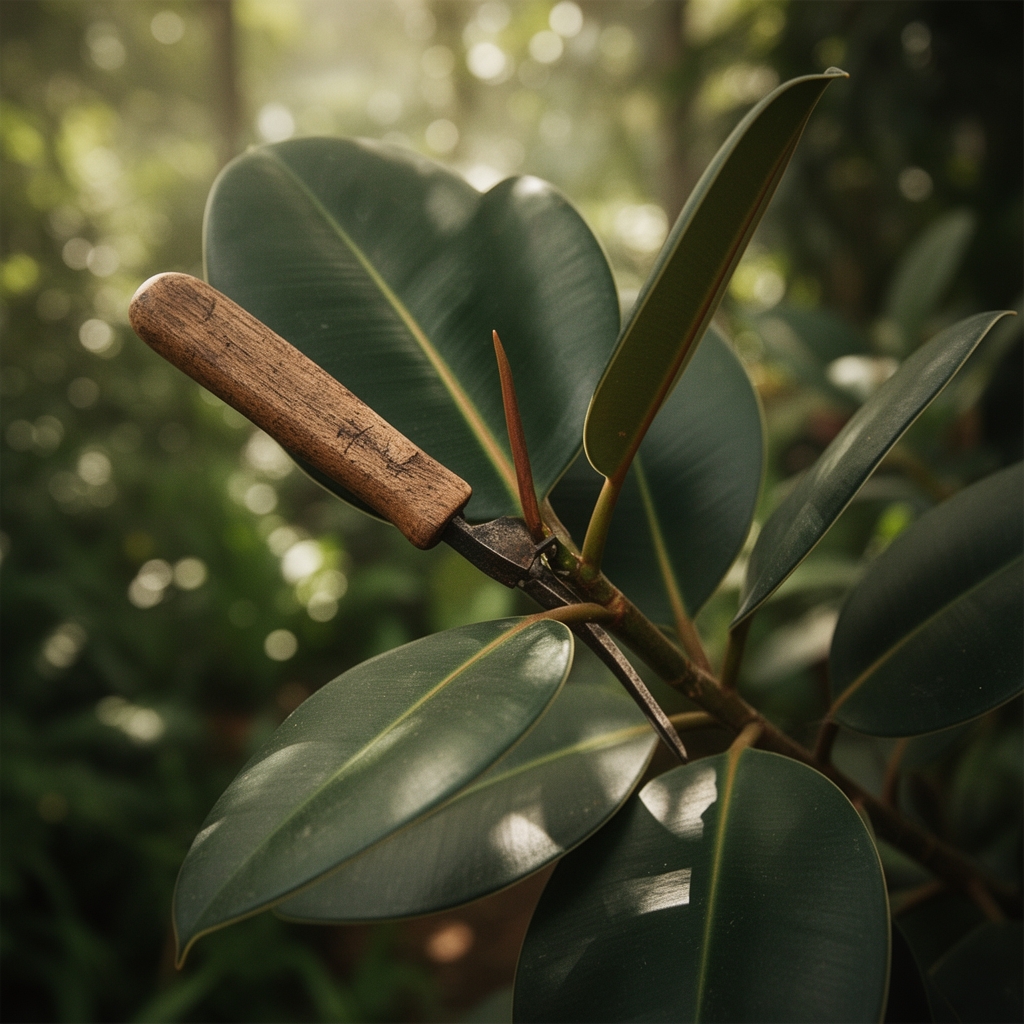
Rubber plants propagate reliably from 6-inch tip cuttings with three to four nodes. Make cuts at a 45-degree angle just below a node using sterilized pruning shears. Remove lower leaves, leaving two at the apex. Dip cut ends in rooting hormone powder containing 0.3% indole-3-butyric acid.
Insert cuttings 2 inches deep into moist perlite or a 50/50 perlite-peat blend. Maintain substrate temperature at 72 to 78 degrees Fahrenheit and humidity at 70 to 80 percent using a clear propagation dome. Roots develop in 14 to 28 days.
Pro-Tip: Apply bottom heat using a seedling mat set to 75 degrees to accelerate root initiation by 40 percent.
Transplanting
Transfer rooted cuttings to 4-inch pots when roots reach 2 inches in length. Use the substrate formula listed in Materials. Handle roots gently to avoid damaging fine root hairs that comprise 60% of the absorptive surface area.
Position the plant at the same depth it grew during propagation. Firm substrate around roots to eliminate air pockets that cause desiccation. Water thoroughly until drainage occurs, then withhold water for 5 days to encourage root exploration.
Pro-Tip: Prune the apical meristem after transplanting to redirect energy into lateral branching and create bushier specimens.
Establishing
Place plants in bright, indirect light with 200 to 400 foot-candles. South or west-facing windows filtered through sheer curtains provide ideal conditions. Rotate containers 90 degrees weekly to prevent phototropic leaning.
Maintain daytime temperatures between 65 and 80 degrees Fahrenheit and nighttime temperatures above 55 degrees. Growth slows below 60 degrees as enzymatic processes become inefficient.
Pro-Tip: Wipe leaves monthly with a damp cloth to remove dust that blocks 20 to 30 percent of photosynthetically active radiation.
Troubleshooting
Symptom: Lower leaves yellowing and dropping systematically from base upward.
Solution: Overwatering. Allow top 2 inches of substrate to dry between waterings. Check drainage holes for blockages. Root rot may be present if substrate smells sour; unpot, trim affected roots, and repot in fresh medium.
Symptom: Brown, crispy leaf edges with yellowing between veins.
Solution: Salt accumulation from over-fertilization or hard water. Flush pots with distilled water at twice the container volume every eight weeks. Switch to rainwater or filtered water with total dissolved solids below 150 ppm.
Symptom: Sticky residue on leaves with small, oval insects clustered on undersides.
Solution: Scale insects. Wipe affected areas with cotton swabs dipped in 70% isopropyl alcohol. Apply horticultural oil at 2% concentration, coating all leaf surfaces. Repeat every 7 days for three applications.
Symptom: New growth emerges pale green or white, lacking chlorophyll.
Solution: Insufficient nitrogen or iron deficiency. Apply chelated iron at 1 tablespoon per gallon of water. Increase fertilizer frequency to every two weeks using 10-5-5 formulation emphasizing nitrogen.
Symptom: Leaf drop without discoloration following relocation.
Solution: Environmental stress response. Minimize movement once positioned. Maintain consistent temperature and light levels. Plants adapt within 10 to 14 days; new growth indicates recovery.
Maintenance
Provide 1 inch of water weekly during active growth, reduced to 0.5 inches during winter dormancy. Use a moisture meter to measure substrate at root-zone depth; water when readings fall to 3 on a 10-point scale.
Prune in early spring before growth resumes. Remove dead or crossing branches at nodes using 30-degree angle cuts that shed water away from remaining tissue. Sterilize tools between cuts with 10% bleach solution.
Repot every 18 to 24 months, increasing container size by 2 inches in diameter. Root-bound specimens show circling roots visible through drainage holes and rapid substrate drying within 48 hours of watering.
Apply 2-inch layer of organic mulch such as shredded bark atop substrate to regulate moisture and suppress fungal gnat populations. Replace mulch every six months as decomposition depletes material.
Monitor for spider mites in low-humidity conditions below 40%. Increase ambient humidity using pebble trays filled with water beneath containers or humidifiers set to maintain 50 to 60% relative humidity.
FAQ
What are the best rubber plant varieties for beginners?
Ficus elastica 'Burgundy' and 'Robusta' tolerate neglect and low light better than variegated cultivars. They maintain color in 100 to 200 foot-candles and forgive inconsistent watering schedules.
How do variegated varieties differ in care requirements?
Variegated types like 'Tineke' and 'Ruby' require 300 to 500 foot-candles to maintain patterning. Lower light causes reversion to solid green as chlorophyll production increases to compensate for reduced photosynthetic efficiency.
Which variety grows most compactly?
'Decora Compacta' reaches 3 to 4 feet at maturity compared to 6 to 10 feet for standard cultivars. It develops 30% shorter internodes through selective breeding for reduced gibberellin sensitivity.
Can rubber plants survive outdoors year-round?
Only in Zones 10b through 11 where temperatures remain above 40 degrees Fahrenheit. Frost causes cellular rupture and irreversible tissue damage. In Zone 10a, protect during cold snaps with frost cloth rated to 28 degrees.
Why do some varieties have red leaf undersides?
Anthocyanin pigments protect photosynthetic tissues from excess light by absorbing wavelengths that would otherwise damage chloroplasts. Varieties like 'Ruby' and 'Burgundy' express this trait constitutively rather than in response to stress.