7 Easy Ways How to Hang Garden Baskets
Hanging garden baskets transform vertical space into productive growing zones, suspending roots, stems, and flowers at eye level where light interception peaks and soil-borne pathogens diminish. Mastering how to hang garden baskets requires understanding load-bearing capacity, irrigation geometry, and the relationship between container volume and root zone temperature. A 12-inch basket filled with moistened potting mix weighs 18 to 22 pounds, demanding hardware rated for 40 pounds minimum to accommodate water weight fluctuations and wind shear. Proper installation of how to hang garden baskets prevents structural failure and creates microclimates that extend bloom periods by 3 to 4 weeks compared to ground-level plantings.
Materials
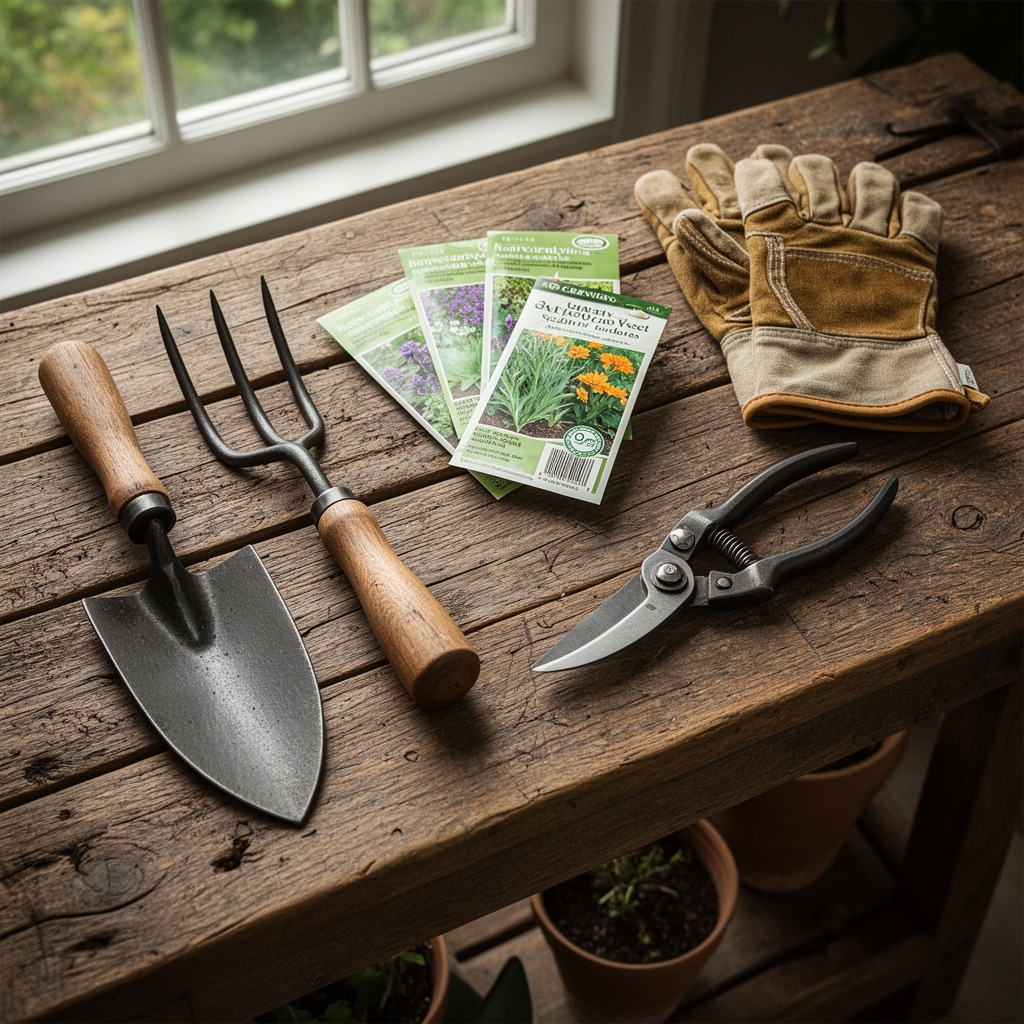
Select wire or resin baskets between 10 and 16 inches in diameter. Wire frames require coco coir or sphagnum moss liners with 1-inch thickness to retain moisture while permitting oxygen diffusion to lateral roots. Resin baskets need pre-drilled drainage holes spaced 2 inches apart along the base perimeter.
Use soilless potting mix containing peat moss or coir (50% by volume), perlite (25%), and aged compost (25%). Target pH between 5.8 and 6.5 for broad compatibility with annual flowers and herbs. Incorporate slow-release fertilizer at planting: 14-14-14 synthetic granules at 1 tablespoon per gallon of mix, or 4-4-4 organic meal (feather meal, bone meal, kelp) at 2 tablespoons per gallon. The lower NPK concentration in organic formulations requires increased application rates to match nitrogen availability.
Hardware must include galvanized steel S-hooks rated for 50 pounds, lag bolts with 3-inch threads for wood beams, or toggle bolts for hollow walls. Swivel hooks reduce stem breakage from wind-induced rotation. Chain or braided aircraft cable provides adjustable height control, critical for matching plant canopy to optimal photosynthetically active radiation (PAR) levels between 400 and 600 micromoles per square meter per second.
Timing
In USDA Hardiness Zones 5 through 7, install hanging baskets outdoors after the final spring frost date, when nighttime temperatures stabilize above 50°F. Petunias, calibrachoa, and geraniums tolerate brief dips to 45°F, but impatiens and coleus exhibit cellular damage below 50°F, visible as water-soaked foliage within 12 hours of cold exposure.
Zones 8 through 10 permit year-round hanging basket culture with species rotation. Plant cool-season crops (violas, snapdragons, diascia) from October through March when daytime highs remain between 60°F and 75°F. Transition to heat-tolerant species (portulaca, lantana, scaevola) in April as temperatures exceed 80°F consistently.
Start seeds indoors 8 to 10 weeks before the target hanging date. Transplant seedlings into baskets 2 weeks before outdoor installation, hardening them off in partial shade for 7 days to increase cuticle thickness and reduce transpiration rates.
Phases
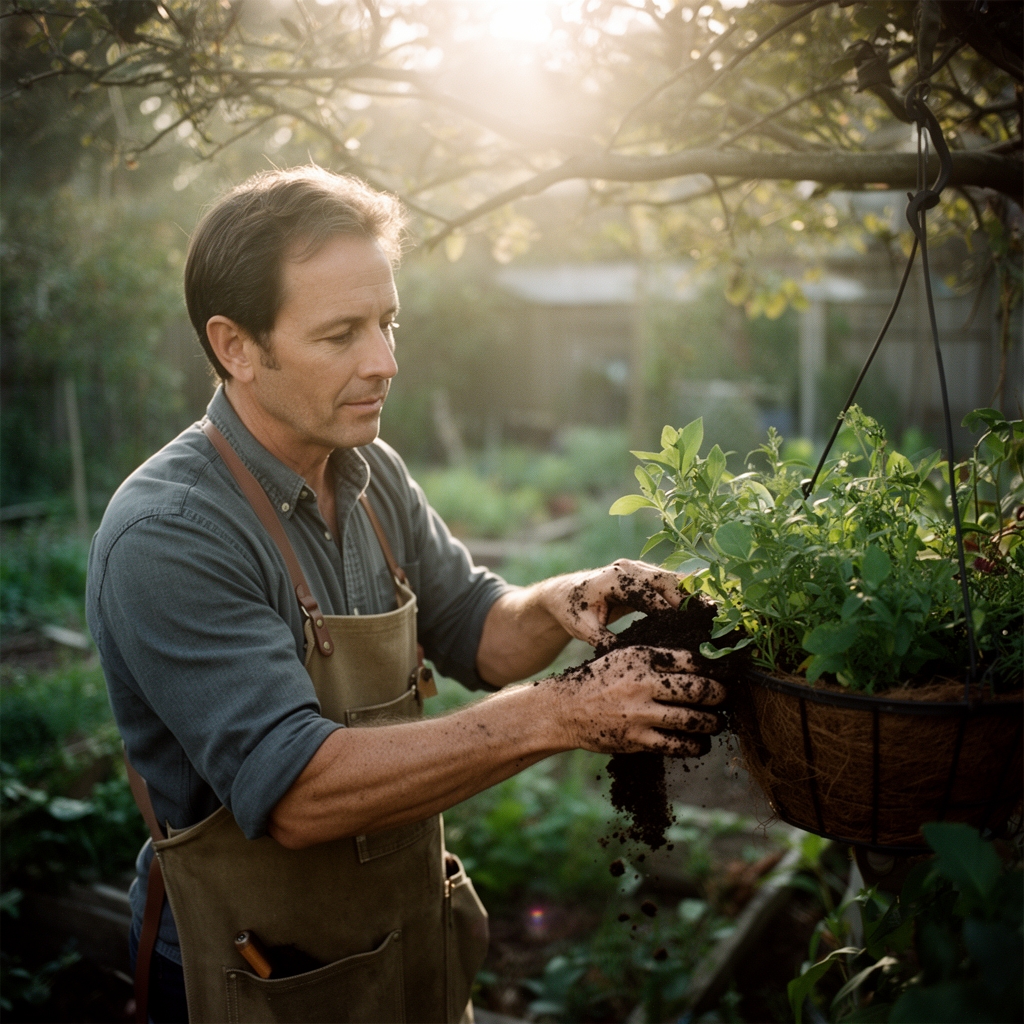
Sowing: Fill containers to 1 inch below the rim. Plant rootbound transplants 1 inch deeper than their nursery depth to encourage adventitious root formation along buried stems. Space plants 4 inches apart in 12-inch baskets (3 to 5 plants total) or 6 inches apart in 16-inch baskets (5 to 7 plants). Firm soil around roots to eliminate air pockets that desiccate root hairs.
Pro-Tip: Mix mycorrhizal fungi inoculant (Glomus intraradices) at 1 teaspoon per plant directly onto root balls. Fungal hyphae colonize roots within 10 days, extending nutrient absorption range by 10 to 40 times and improving drought tolerance.
Transplanting: Water baskets to field capacity before hanging. Install hooks into structural beams or joists, avoiding fascia boards that bear only trim weight. Position baskets where they receive 6 to 8 hours of direct sun for flowering annuals, or 4 to 6 hours for foliage plants like ferns and begonias. Maintain 18 inches of clearance above the basket rim to accommodate mature canopy spread.
Pro-Tip: Pinch terminal buds at transplanting, removing the top 1 inch of each stem at a 45-degree angle. This redirects auxin distribution to lateral buds, producing 30% more branching within 14 days.
Establishing: Monitor soil moisture daily for the first 2 weeks. Roots penetrate only the central 3 inches during establishment, creating uneven moisture distribution. Apply water until it drains from the base, indicating saturation of the entire root zone.
Pro-Tip: Apply foliar kelp extract (diluted 1:500) weekly during establishment. Cytokinins and auxins in kelp accelerate root hair proliferation, reducing transplant shock by 40%.
Troubleshooting
Symptom: Chlorosis (yellowing) of lower leaves with green veins intact.
Solution: Iron deficiency, common in alkaline soils or mixes with high cation exchange capacity. Apply chelated iron (Fe-EDDHA) at 1 teaspoon per gallon of water as a soil drench. Adjust future mix pH to 6.0 or below.
Symptom: Wilting at midday despite moist soil.
Solution: Root rot caused by Pythium or Phytophthora fungi in poorly drained media. Remove affected plants. Drench remaining soil with mefenoxam fungicide at labeled rates. Improve drainage by adding 10% coarse sand to the mix.
Symptom: Marginal leaf necrosis (brown edges) with curled tips.
Solution: Salt accumulation from over-fertilization. Leach soil with 2 gallons of water per gallon of container volume. Reduce fertilizer concentration by 50% for the next 3 applications.
Symptom: Sticky leaves with sooty mold.
Solution: Aphid infestation excreting honeydew. Spray insecticidal soap (potassium salts of fatty acids) at 2% concentration, covering leaf undersides. Repeat every 5 days for 3 applications.
Maintenance
Apply 1 inch of water daily when temperatures exceed 80°F, measured by inserting a moisture meter 4 inches deep (target reading: 5 to 6 on a 10-point scale). Reduce frequency to every other day below 75°F. Hanging baskets dry 50% faster than ground containers due to increased surface-area-to-volume ratios and convective heat loss.
Feed every 10 to 14 days with liquid fertilizer (20-20-20) diluted to 200 ppm nitrogen, or apply compost tea at 1 cup per basket weekly. Continuous blooming depletes potassium reserves; supplement with 0-0-50 sulfate of potash at 1/2 teaspoon per basket monthly during peak flowering.
Deadhead spent flowers every 3 days, cutting stems back to the first five-leaflet node. This prevents seed formation, which triggers senescence hormones that reduce new bud initiation by 60%.
FAQ
How much weight can a typical ceiling hook support?
Standard screw-in hooks hold 10 to 15 pounds. Use lag bolts threaded into solid wood joists for 40- to 50-pound capacity, necessary for mature saturated baskets.
Which plants thrive in partial shade hanging baskets?
Fuchsias, impatiens, begonias, and torenia perform well with 3 to 5 hours of sun. These species exhibit reduced stomatal density, lowering water loss in lower-light conditions.
How often should I rotate hanging baskets?
Rotate 180 degrees weekly to equalize light distribution and prevent phototropic lean. Uneven growth creates 20% more weight on sun-facing sides, stressing attachment points.
Can I reuse potting mix from last year's baskets?
Avoid reuse without pasteurization. Mixes harbor fungal spores and depleted nutrient reserves. Bake old mix at 180°F for 30 minutes or compost for 6 months before reincorporating.
Why do my baskets dry out in hours after watering?
Root-bound conditions reduce water-holding capacity as roots displace soil volume. Transplant into containers 2 inches larger in diameter, or trim outer roots by 1 inch and replant with fresh mix.