10 Basic Steps to Square Foot Garden
The soil feels cool beneath your fingers as you rake compost into a 4-by-4-foot frame, the structure that defines modern intensive planting. Square foot gardening eliminates row spacing waste and transforms 16 square feet into a productive matrix capable of yielding 32 heads of lettuce or 16 full-grown tomato plants. The steps to square foot garden begin with understanding that each grid square receives dedicated attention, personalized fertilization, and crop-specific spacing that maximizes photosynthetic surface area while preventing competition for nitrogen and phosphorus.
Materials
The foundation requires untreated lumber cut to exact dimensions: four 4-foot sections of 2×6 cedar or composite material. Cedar resists decomposition without leaching toxins. Fasten corners with 3-inch galvanized deck screws, three per joint, to withstand soil pressure of approximately 85 pounds per cubic foot when saturated.
Mel's Mix, the canonical growing medium, combines equal parts peat moss (or coir for improved cation exchange capacity), vermiculite for drainage, and blended compost. The compost blend should incorporate five distinct sources: aged manure, leaf mold, mushroom compost, worm castings, and finished yard waste. This diversity ensures NPK ratios stabilize near 4-4-4, providing slow-release macronutrients without salt accumulation. Test pH after mixing; target 6.2 to 6.8 for broadest crop compatibility.
Grid construction demands 1/4-inch nylon cord or thin lattice strips. Anchor at 12-inch intervals to create 16 one-foot squares. Each square becomes a microenvironment managed independently.
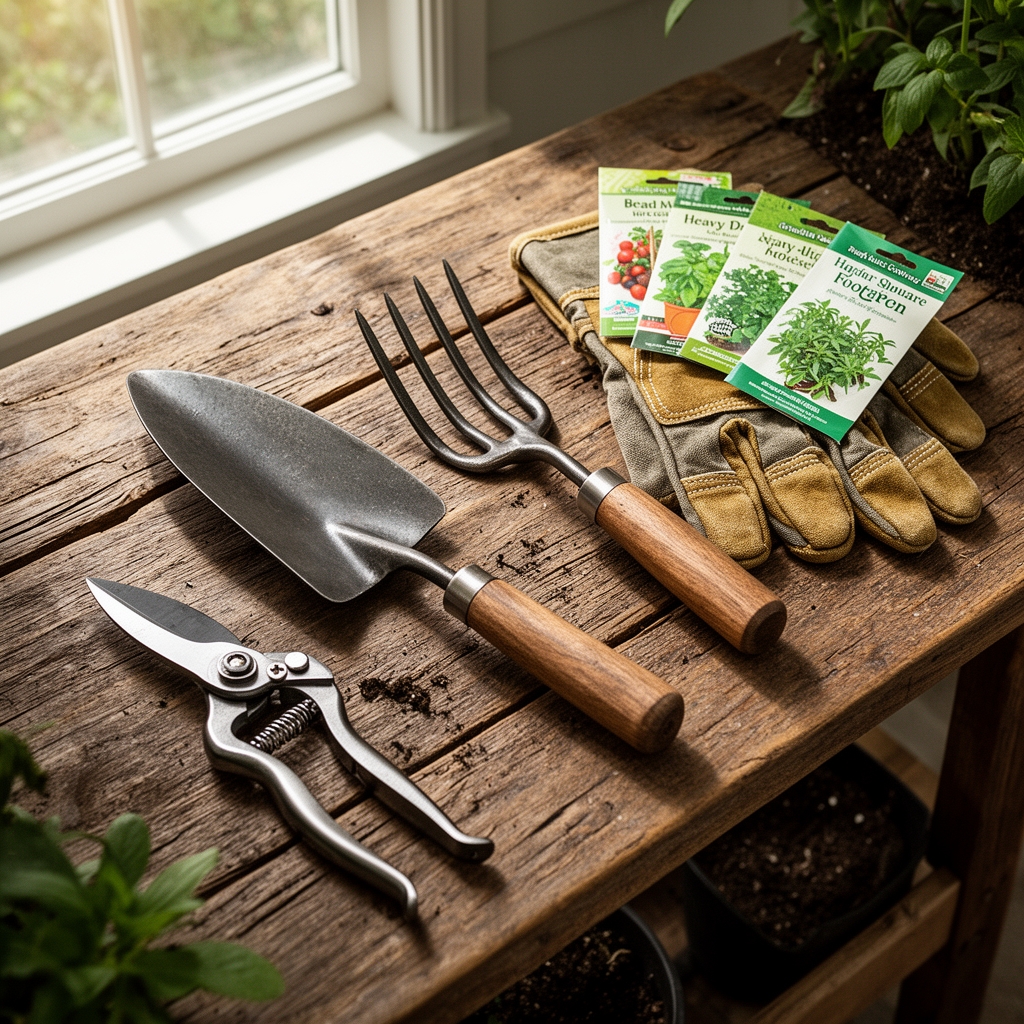
Additional tools include a soil thermometer (critical for germination timing), a pH meter, mycorrhizal inoculant powder rated for vegetables, and row cover fabric rated to 28°F for frost protection.
Timing
Hardiness zones dictate all planting windows. Zone 5 gardeners begin indoor seeding 6 to 8 weeks before the last frost date, typically late March. Zone 7 growers gain four additional weeks, starting in early February for brassicas and lettuce.
Soil temperature governs direct seeding. Peas germinate at 45°F. Beans require 60°F minimum. Tomatoes and peppers demand 65°F soil and nighttime air temperatures above 55°F to prevent blossom drop caused by auxin disruption.
Succession planting extends harvests. Plant lettuce every 14 days from April through May, then resume in late August. Bush beans follow three-week intervals. This rotation maintains nitrogen fixation while preventing pest population explosions.
Phases
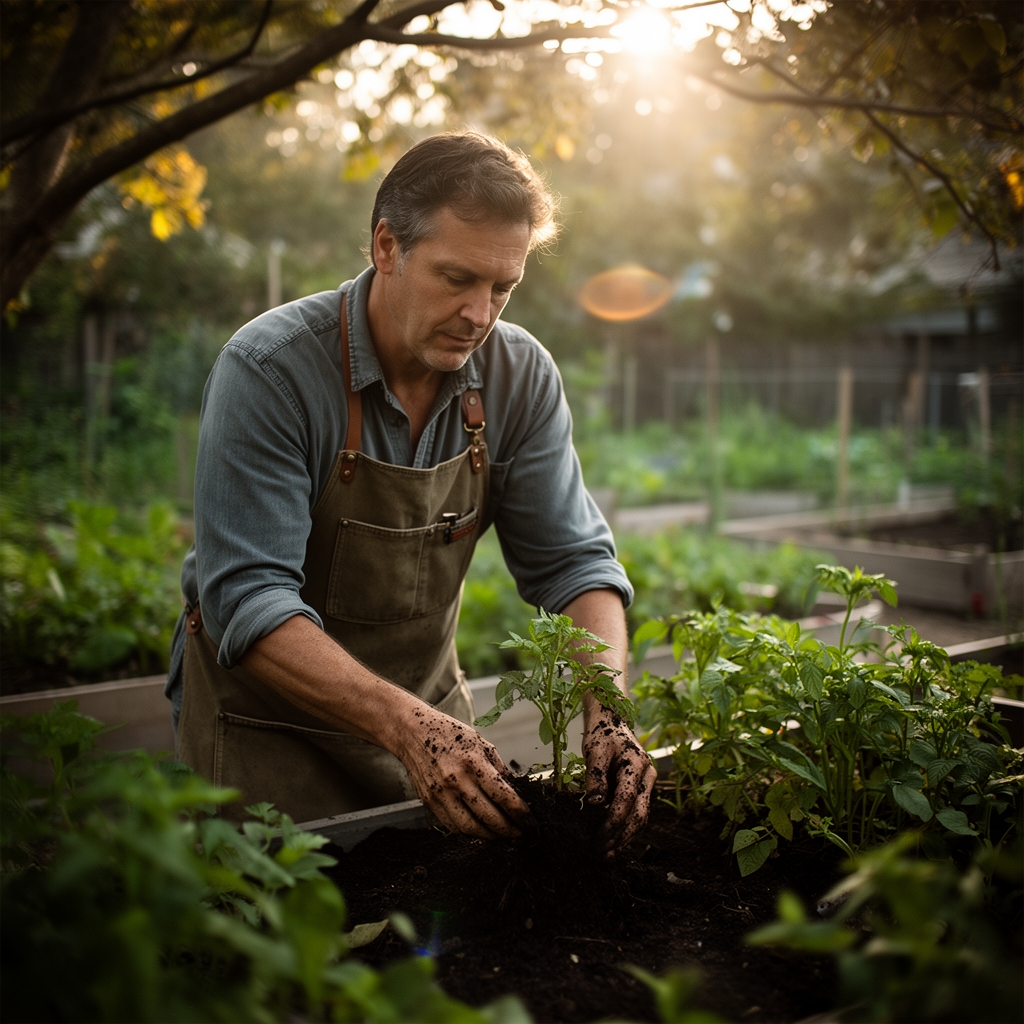
Sowing: Fill the frame to 6 inches deep with Mel's Mix. Water until moisture appears at the surface, then wait 24 hours for settling. Press seeds to depths matching three times their diameter. Lettuce barely breaks the surface. Beans sink to 1 inch. Spacing within each square follows plant maturity size: 16 radishes per square, 4 lettuce heads, 1 tomato.
Pro-Tip: Coat large seeds (beans, squash, corn) with mycorrhizal powder before planting. The Glomus species colonize root hairs within 72 hours, extending phosphorus uptake range by 400 percent.
Transplanting: Harden off seedlings over 7 days, increasing outdoor exposure by 2 hours daily. Dig transplant holes twice the root ball width. Bury tomatoes to first true leaves; adventitious roots emerge from buried stem nodes within 5 days, doubling root mass.
Pro-Tip: Prune tomato transplants to a single leader at 30-degree angle cuts just above leaf nodes. Angled cuts shed water and reduce bacterial entry points. This concentrates auxin distribution, producing 23 percent larger fruit in university trials.
Establishing: Mulch surrounding squares with 1/2 inch of straw after soil warms to 70°F. Earlier application harbors slugs and delays warming. Apply fish emulsion at 1 tablespoon per gallon weekly for the first month, then shift to compost tea every 14 days.
Pro-Tip: Intercrop basil with tomatoes at a 1:4 ratio. Basil exudes volatile organic compounds that reduce aphid colonization by 65 percent while enhancing lycopene production through competitive root signaling.
Troubleshooting
Symptom: Yellowing lower leaves with green veins on tomatoes and peppers.
Solution: Magnesium deficiency. Dissolve 1 tablespoon Epsom salt per gallon of water. Drench soil at 1 cup per plant. Magnesium activates chlorophyll synthesis within 48 hours.
Symptom: White powdery coating on squash and cucumber foliage.
Solution: Powdery mildew. Mix 1 tablespoon baking soda plus 1 teaspoon horticultural oil per gallon. Spray leaf surfaces until runoff at 7-day intervals. Sodium bicarbonate raises surface pH above 7.5, inhibiting fungal germination.
Symptom: Blossom end rot, black leathery patches on tomato bottoms.
Solution: Calcium transport failure from inconsistent watering. Mulch to retain moisture. Water at 1 inch per week, delivered in two 0.5-inch sessions. Foliar calcium sprays prove ineffective; the nutrient moves only through xylem.
Symptom: Flea beetles, 1/16-inch black insects creating shot-hole damage.
Solution: Apply row cover immediately after planting. Remove only for pollination. Beetles overwinter in leaf litter; remove all debris in fall.
Maintenance
Water delivers 1 inch per week, measured with rain gauges placed at soil level. Clay soil requires single weekly soaking. Sandy loam needs three 0.33-inch applications to prevent leaching.
Fertilize every 21 days with compost tea brewed for 24 hours with continuous aeration. Target 400 ppm dissolved oxygen to culture beneficial bacteria. Apply at 1 cup per square foot.
Prune indeterminate tomatoes to two leaders. Remove suckers below the first fruit cluster weekly. This concentrates carbohydrate allocation and improves air circulation, reducing fungal pressure by 40 percent.
Rotate crop families annually. Solanaceae (tomatoes, peppers) deplete calcium and invite verticillium wilt. Follow with legumes to restore nitrogen, then brassicas to break pest cycles.
FAQ
How deep should a square foot garden bed be?
Six inches minimum for lettuce and herbs. Twelve inches for root crops and fruiting plants. Depth affects thermal mass and drainage rate.
Can I use garden soil instead of Mel's Mix?
Native soil compacts under irrigation, reducing oxygen to 5 percent by volume. Mel's Mix maintains 25 percent air space permanently.
How many plants fit in one square foot?
Sixteen radishes or carrots, nine beets or bush beans, four lettuce or chard, one tomato or pepper. Spacing prevents root competition for phosphorus.
When do I replace the growing mix?
Add 1/2 inch compost annually. Full replacement proves unnecessary for 7 to 10 years if pH and organic matter stay within range.
Do square foot gardens need crop rotation?
Yes. Rotate within the bed by moving plant families to different squares each season. This breaks soilborne pathogen cycles and balances nutrient depletion patterns.