7 Pro Tips How to Use Straw Bales
Straw bales transform from cattle bedding into productive garden beds through a controlled decomposition process that generates internal heat reaching 140°F while creating a nutrient-rich substrate. Learning how to use straw bales for cultivation requires understanding the biology of nitrogen cycling, the chemistry of carbon-to-nitrogen ratios, and the precise timing of microbial colonization. The method suits gardeners facing poor native soil, limited mobility, or contaminated ground.
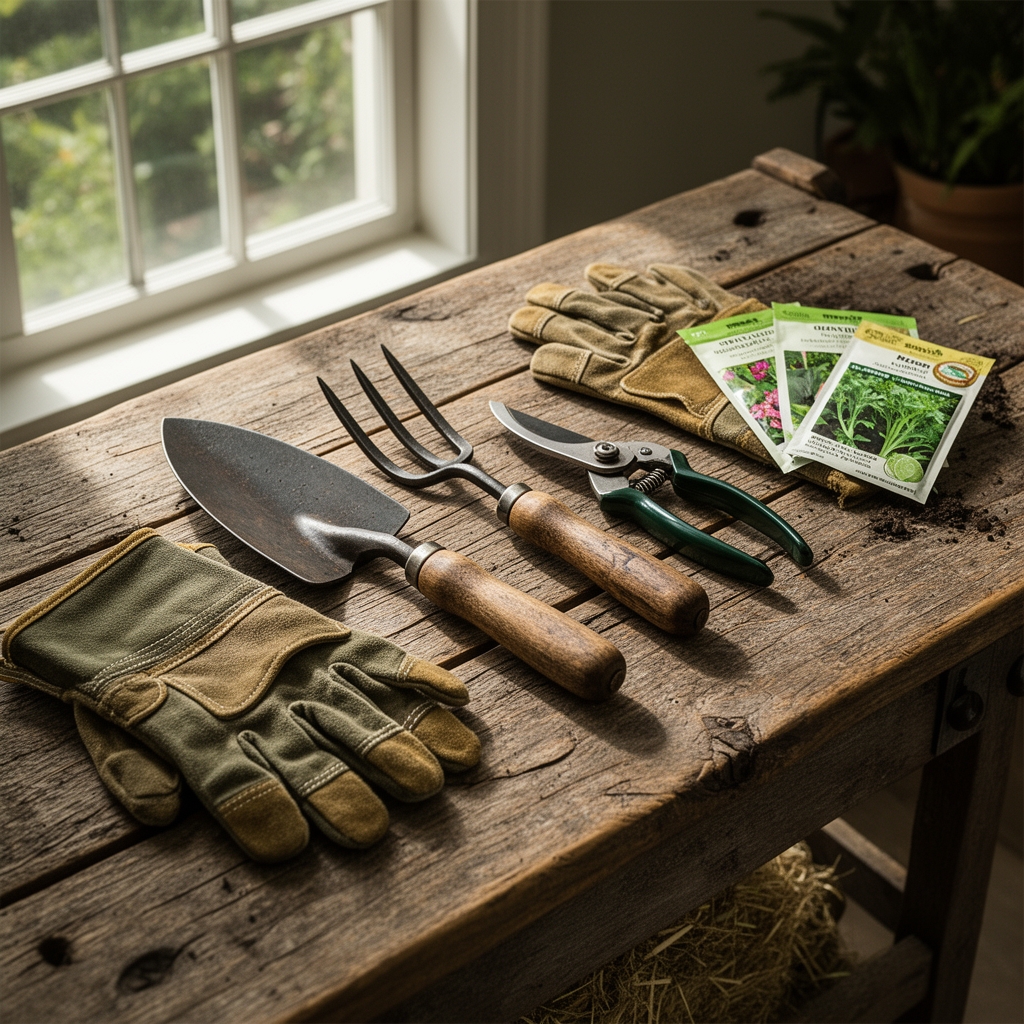
Materials
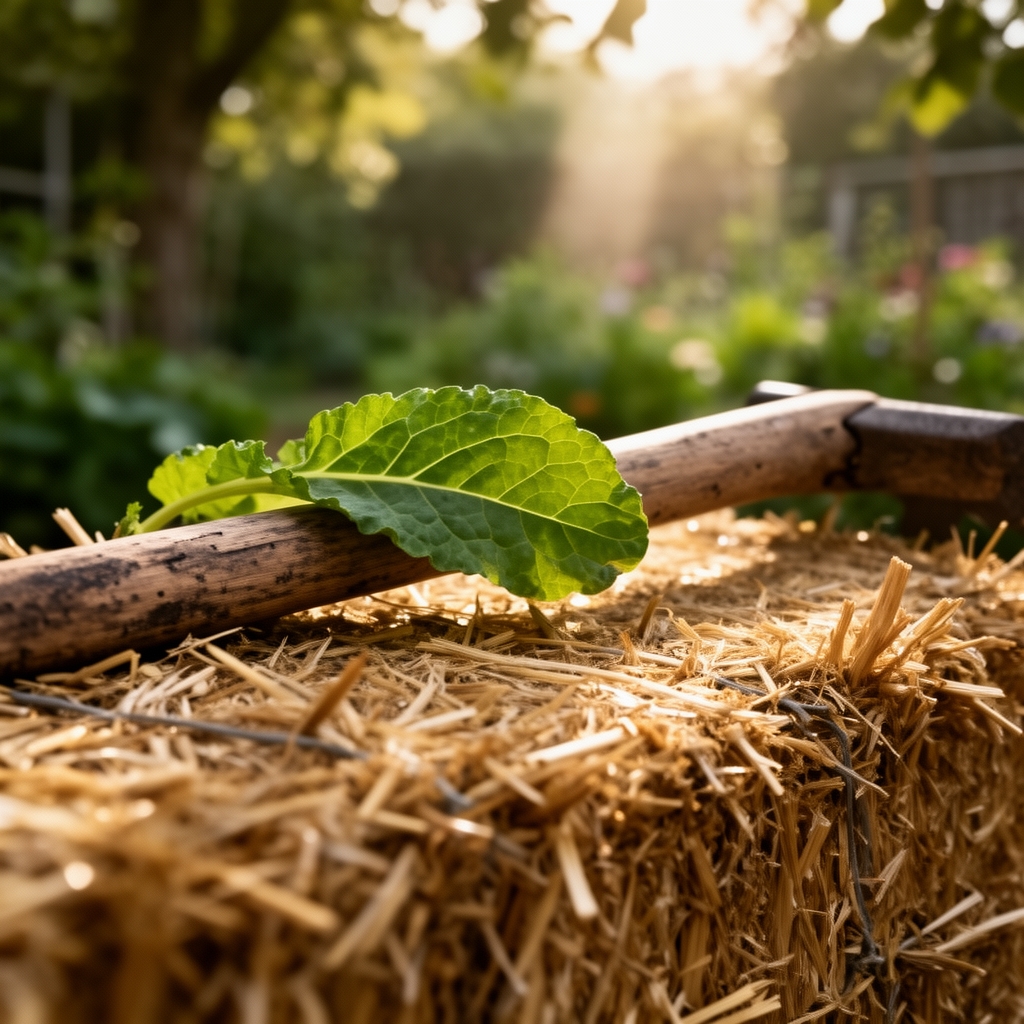
Select wheat or oat straw bales weighing 40-60 pounds with tight binding wire or synthetic twine. Avoid hay bales, which contain seed heads that germinate into weeds. The carbon-to-nitrogen ratio of fresh straw sits at approximately 80:1, requiring supplemental nitrogen to initiate decomposition.
For conditioning, source a high-nitrogen fertilizer at 10-10-10 synthetic blend or organic blood meal at 12-0-0. Organic gardeners may substitute feather meal (13-0-0) or fish meal (10-6-2). Each bale requires 3 pounds of synthetic fertilizer or 4.5 pounds of organic amendments spread across 10-14 days.
Obtain mycorrhizal inoculant containing Glomus intraradices and Glomus mosseae species. These arbuscular mycorrhizal fungi colonize root systems and extend hyphal networks that increase phosphorus uptake by 300-400%. Mix 2 tablespoons per transplant hole.
Acquire a soil pH meter with 0.1-unit precision. Straw bales condition to pH 6.8-7.2 naturally, suitable for most vegetables. Acid-loving plants like blueberries require elemental sulfur amendments at 1/4 cup per bale to lower pH to 4.5-5.5.
Purchase drip irrigation tubing or soaker hoses. Bale cultivation demands 2-3 gallons daily per bale during peak summer, delivered directly to avoid foliar disease.
Timing
Position bales in USDA Hardiness Zones 3-10 between late March and mid-May, calculated as 18-21 days before the last expected frost date. The conditioning process requires 12-14 days, followed by a 4-7 day cooling period before transplanting.
In Zone 5, begin conditioning April 1 for May 1 transplanting of tomatoes, peppers, and cucurbits. In Zone 8, start February 20 for March 20 planting. Fall crops in northern zones require mid-July conditioning for August establishment of brassicas and lettuces.
Internal bale temperature must drop below 85°F before root contact. Insert a compost thermometer 8 inches deep at the center. Temperatures above 90°F cause root pruning and auxin distribution disruption.
Phases
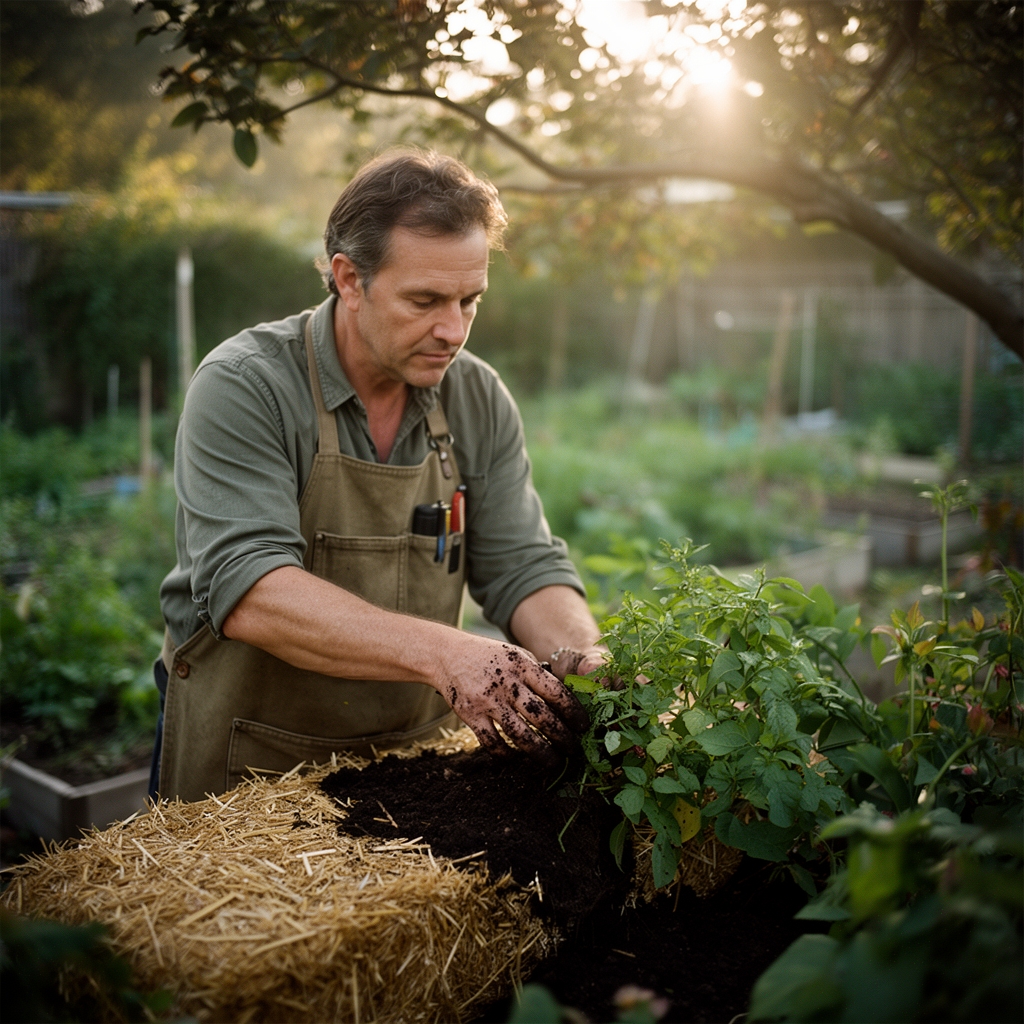
Conditioning Phase (Days 1-10)
Apply 1/2 cup of 10-10-10 fertilizer across the top surface daily for days 1-3. Water thoroughly with 1 gallon until runoff appears from the bottom. The nitrogen activates Actinobacteria and Bacillus species that begin cellulose breakdown.
On days 4-6, reduce application to 1/4 cup daily while maintaining watering. Internal temperature climbs to 120-140°F as thermophilic bacteria proliferate. The cation exchange capacity increases from 2 meq/100g to 15 meq/100g as lignin decomposes into humic compounds.
Days 7-9 require 1/4 cup every other day. Add 1 cup of bone meal (3-15-0) per bale on day 8 to boost phosphorus levels for root development. Day 10 receives only water, no fertilizer.
Pro-Tip: Introduce 2 tablespoons of soluble kelp extract (0-0-17 with micronutrients) on day 8. The cytokinins in kelp stimulate lateral root formation and increase stress tolerance by 40%.
Transplanting Phase (Days 14-16)
Create planting pockets by separating straw strands with a trowel to form 6-inch-deep cavities. Fill each pocket with 2 cups of commercial potting mix containing peat, perlite, and compost. This substrate anchors young roots while they penetrate the conditioned straw matrix.
Space transplants 12-14 inches apart for determinate tomatoes, 18 inches for indeterminate varieties. Brassicas tolerate 8-inch spacing. Insert mycorrhizal inoculant directly against root balls.
Pro-Tip: Prune tomato seedlings at a 45-degree angle 1 inch above the soil line immediately after transplanting, removing all growth below the first true leaves. Bury stems horizontally 4 inches deep in the bale. Adventitious roots form along buried stems, increasing water and nutrient absorption by 60%.
Establishing Phase (Days 17-35)
Monitor soil moisture with a probe daily. Straw bales drain rapidly, requiring irrigation when the top 2 inches feel dry. Install stakes or cages during week three, before root systems expand. Driving supports later severs established roots.
Apply 1/4 cup of balanced fertilizer weekly for the first month. Transition to bloom formulas (5-10-10) when flower buds appear. The decomposing straw releases nitrogen continuously, but phosphorus and potassium require supplementation.
Pro-Tip: Foliar spray with 1 tablespoon of Epstein salt per gallon every 14 days. The magnesium activates chlorophyll synthesis and improves photosynthetic efficiency by 15-20% in solanaceous crops.
Troubleshooting
Symptom: Seedlings wilt despite adequate moisture. Leaves curl upward and stems elongate.
Solution: Internal temperature exceeds safe levels. Remove plants, water heavily to accelerate cooling, and wait 4 additional days before replanting.
Symptom: Yellow lower leaves with green veins, progressing upward.
Solution: Nitrogen deficiency from insufficient conditioning or excessive leaching. Apply 1/2 cup of blood meal, scratched into the surface, followed by thorough watering.
Symptom: Mushroom fruiting bodies emerge from bale sides.
Solution: Saprophytic fungi decompose lignin beneficially. Remove fruiting bodies to prevent spore dispersal but maintain fungal mycelium networks that enhance nutrient cycling.
Symptom: Bale exterior dries to gray while interior remains dark.
Solution: Inadequate water penetration. Drill 1-inch diameter holes 10 inches deep at 6-inch intervals across the top surface to channel irrigation.
Symptom: Fruit sets poorly despite abundant flowering.
Solution: Phosphorus lockout from elevated pH. Apply 1/4 cup of ammonium sulfate (21-0-0) to lower pH and increase phosphate availability through enhanced root exudate production.
Maintenance
Deliver 2 gallons of water per bale daily during temperatures above 80°F. Reduce to 1 gallon during overcast periods or when temperatures drop below 70°F. Install rain gauges to track natural precipitation and adjust supplemental irrigation accordingly.
Feed every 10 days with liquid fertilizer at half-strength (1 tablespoon per 2 gallons). Alternate between high-nitrogen formulas (20-10-10) during vegetative growth and bloom boosters (10-30-20) during reproductive phases.
Prune indeterminate tomatoes to single leaders by removing suckers when they reach 2-3 inches long. This concentrates auxin flow and increases fruit size by 25-30%. Remove lower leaves 12 inches from the base once plants reach 24 inches tall to improve air circulation and reduce fungal disease incidence.
At season end, dismantle bales and incorporate decomposed straw into garden beds. The material provides 40-50% organic matter content and improves soil structure for 2-3 subsequent seasons.
FAQ
How long do straw bales last?
Single-season bales decompose 60-70% during active cultivation. Remnant material breaks down completely by the following spring. Plan for annual replacement.
Can straw bales support root vegetables?
Carrots, radishes, and beets grow successfully with 10-12 inches of potting soil layered across the top. The loose structure prevents root deformation common in clay soils.
What yield increase does bale gardening provide?
Tomatoes produce 15-20% more fruit per plant compared to in-ground cultivation due to improved drainage, warmer root zones, and elimination of soilborne pathogens.
Do bales attract rodents?
Fresh straw contains minimal grain seeds. Voles and mice show no preference for conditioned bales versus traditional mulch. Maintain 6-inch bare zones around bale perimeters to reduce habitat.
Is organic certification possible?
Source straw from certified organic farms and use OMRI-listed fertilizers. Bale cultivation meets USDA organic standards when all inputs comply with NOP regulations.