9 Expert Steps to Ficus Lyrata Maintenance
The broad, glossy leaves of Ficus lyrata collect dust and light in equal measure, transforming a corner into a statement of controlled growth. Yet beneath its architectural form lies a plant evolved for equatorial rainforest conditions, demanding precise replication of humidity, light intensity, and nutrient availability. Mastering the steps to ficus lyrata maintenance requires understanding its vascular system, root zone chemistry, and auxin distribution patterns that govern its dramatic vertical growth.
Materials
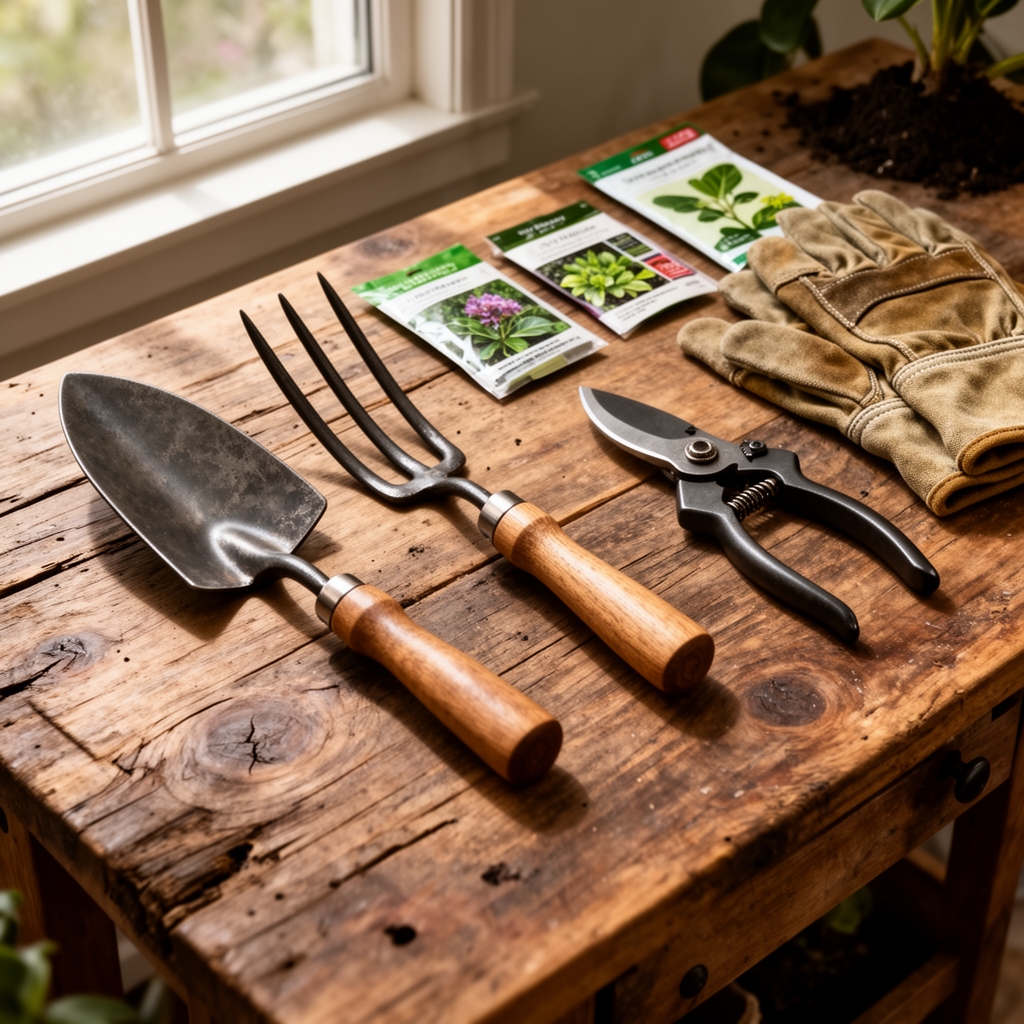
Substrate composition determines cation exchange capacity and drainage velocity. Formulate a medium combining 40% peat moss or coco coir (pH 5.5-6.5), 30% pine bark fines, 20% perlite, and 10% worm castings. This blend retains moisture while preventing anaerobic conditions at the root interface.
Fertilization demands balanced NPK formulations during active growth. Apply a 3-1-2 ratio liquid fertilizer diluted to half strength every two weeks from April through September. Organic alternatives include fish emulsion (5-1-1) or kelp meal (1-0.5-2), which provide trace elements including boron and molybdenum critical for cell wall synthesis. Avoid high-nitrogen formulations (10-5-5 or greater) after August; excess nitrogen reduces lignification before dormancy.
pH testing strips or digital meters calibrated to 0.1 precision ensure substrate maintains 6.0-6.5 range. Dolomitic limestone raises pH by 0.5 units per tablespoon per gallon of medium. Elemental sulfur lowers pH gradually at 1 teaspoon per gallon.
Containers require drainage holes with diameter exceeding 0.5 inches. Terra cotta permits gas exchange through sidewalls but increases irrigation frequency. Glazed ceramic or plastic reduces evapotranspiration loss by 40%.
Timing
Ficus lyrata tolerates no frost exposure. USDA Hardiness Zones 10b-11 permit year-round outdoor cultivation where nighttime lows remain above 50°F. Indoor specimens across all zones require stable temperatures between 65-85°F with minimal fluctuation.
Repotting occurs in early spring as apical buds swell, indicating resumed cambial activity. This window extends from late February in Zone 9 to mid-April in Zone 6 for indoor plants. Root disturbance during active growth (June-August) triggers leaf abscission through ethylene cascade responses.
Pruning schedules align with dormancy in December through February when auxin concentrations decline in terminal meristems. Cuts made during this period minimize latex flow and redirect spring growth effectively.
Phases

Establishment Phase (Weeks 1-8)
Position container within 3-5 feet of south or west-facing windows providing 300-500 foot-candles indirect light. Direct sun causes scorching and chlorophyll degradation visible as bronze stippling within 72 hours. Rotate container 90 degrees weekly to maintain symmetrical auxin distribution and prevent phototropic lean.
Initial irrigation saturates substrate until water flows from drainage holes. Allow top 2 inches to dry completely between applications. Root establishment requires alternating wet-dry cycles stimulating lateral root proliferation through localized hypoxia signals.
Pro-Tip: Introduce mycorrhizal fungi (Glomus species) at planting by incorporating 1 tablespoon of inoculant directly onto root ball. Fungal hyphae extend effective root surface area by 1000%, improving phosphorus uptake in the critical establishment window.
Growth Phase (Months 3-18)
Maintain relative humidity between 40-60% measured at plant canopy height. Humidity below 35% causes stomatal closure and reduced photosynthetic efficiency. Install humidifiers or place containers on pebble trays filled with water below pot base, avoiding direct contact.
Apply foliar cleaning monthly using distilled water and microfiber cloth. Dust accumulation reduces light absorption by up to 30%, directly impacting carbon fixation rates. Support petioles during cleaning to prevent mechanical damage at abscission zones.
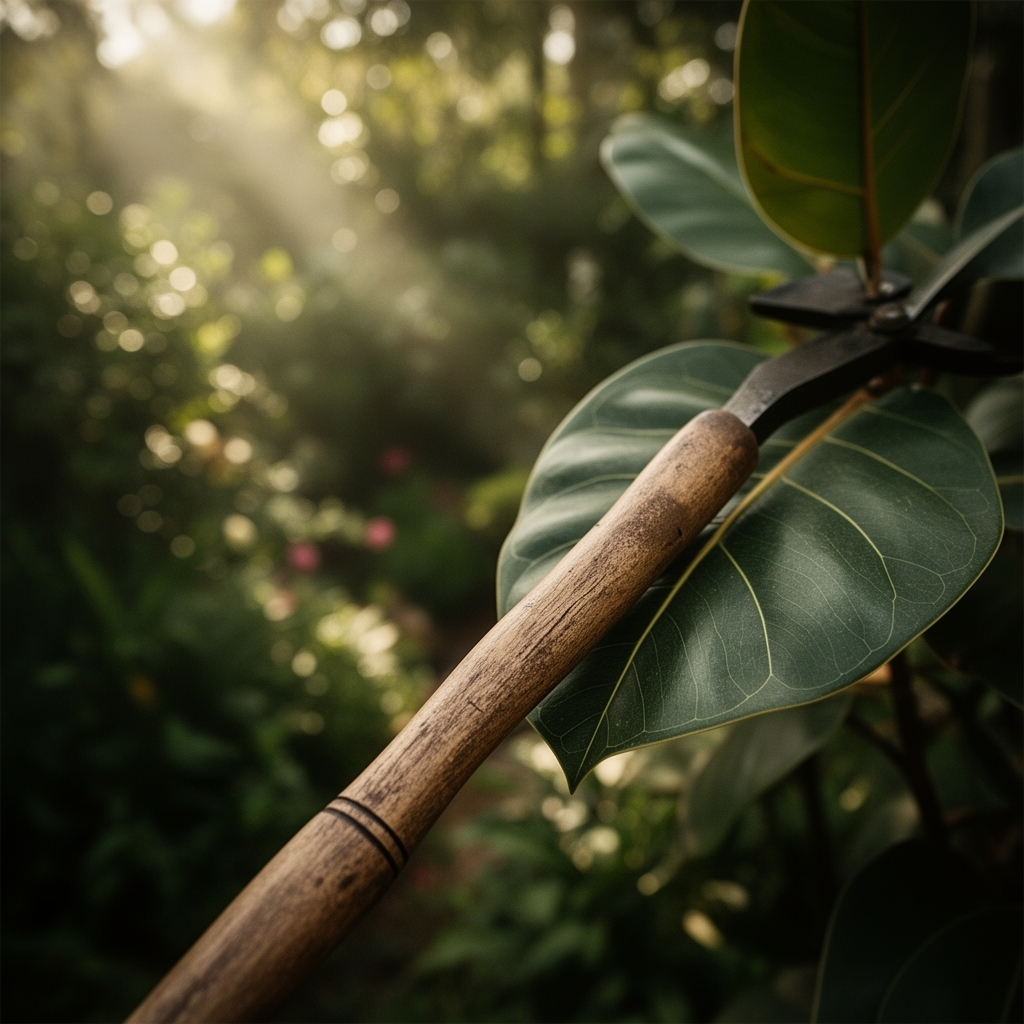
Pro-Tip: Prune to outward-facing nodes at 45-degree angles using sterilized bypass pruners. This angle sheds latex efficiently and promotes lateral branching at 60-90 degrees from vertical axis, creating fuller canopy architecture.
Maturity Phase (18+ Months)
Specimens exceeding 6 feet require structural assessment. Heavy leaning indicates inadequate lignification or root instability. Install bamboo stakes secured with soft ties at multiple points along trunk, avoiding constriction of vascular cambium.
Repot every 18-24 months into containers 2 inches larger in diameter. Root-bound specimens show circling roots visible at drainage holes and reduced internode elongation despite adequate fertility.
Pro-Tip: Score root balls vertically with clean knife at four quadrants, penetrating 0.5 inches deep. This severs circling roots and stimulates new radial growth into fresh substrate.
Troubleshooting
Symptom: Brown edges progressing from leaf margins inward.
Solution: Indicates salt accumulation from overfertilization or fluoridated water. Leach substrate with distilled water at 2x container volume. Switch to rainwater or reverse osmosis water for irrigation.
Symptom: Yellow lower leaves with green veins.
Solution: Iron chlorosis from alkaline pH (>7.0) limiting iron availability. Apply chelated iron (Fe-EDTA) at 1 tablespoon per gallon as soil drench. Amend substrate with elemental sulfur to reduce pH long-term.
Symptom: Small brown spots with yellow halos expanding rapidly.
Solution: Bacterial leaf spot (Xanthomonas species). Remove affected foliage 2 inches below symptomatic tissue. Reduce overhead watering and improve air circulation to below 80% relative humidity.
Symptom: White cottony masses at petiole junctions.
Solution: Mealybugs (Planococcus citri). Apply 70% isopropyl alcohol directly to insects using cotton swabs. For heavy infestations, spray neem oil (0.5% azadirachtin) at 7-day intervals for three applications.
Symptom: Sudden leaf drop without discoloration.
Solution: Environmental shock from temperature drops below 55°F or drafts from HVAC vents. Relocate away from temperature fluctuations and maintain stable conditions.
Maintenance
Irrigate when moisture meter reads 3-4 at root zone depth (4 inches). Apply 0.25 gallons per 10-inch container diameter, adjusting for evapotranspiration rates. Winter irrigation reduces to every 10-14 days as metabolic activity decreases.
Wipe leaves monthly with solution of 1 teaspoon insecticidal soap per quart water. This removes honeydew deposits and prevents sooty mold colonization.
Inspect undersides of leaves weekly for spider mite webbing or stippling. Early detection permits mechanical control before populations reach economic thresholds.
Monitor substrate pH quarterly using slurry method: combine equal parts soil and distilled water, let settle 30 minutes, measure liquid phase.
FAQ
How often should I fertilize during winter?
Suspend fertilization from November through February. Reduced photosynthetic rates during short photoperiods mean plants cannot utilize nutrients efficiently, leading to salt accumulation and root burn.
Can ficus lyrata tolerate low light?
Minimum threshold is 150 foot-candles. Below this, internode elongation increases (etiolation) and lower leaves abscise. Supplement with full-spectrum LED grow lights providing 12-14 hour photoperiods.
Why do leaves develop brown spots after moving the plant?
Sudden light intensity changes cause localized cell death. Acclimate gradually over 10-14 days by increasing light exposure 1 hour daily to allow chloroplast adaptation.
When should I prune to control height?
Cut during dormancy (January-February) at desired height above node. Latex seals wounds naturally; avoid sealants that trap pathogens. New growth emerges from uppermost lateral buds in spring.
Is misting effective for humidity?
No. Misting provides temporary humidity spikes lasting under 30 minutes and promotes fungal pathogens on leaf surfaces. Use room humidifiers for sustained atmospheric moisture instead.