8 Clever Ways How to Build Herb Spirals
The morning sun warms the spiral of stone at different rates. Basil stretches toward light at the top where drainage is sharp and the soil dries within hours. Mint occupies the cool base near the retention pond, roots spreading into moisture-rich loam. Learning how to build herb spirals transforms a flat garden into a three-dimensional ecosystem, stacking microclimates within a footprint no larger than eight feet in diameter. The structure captures 40% more growing surface than a conventional bed of equal square footage.
Materials
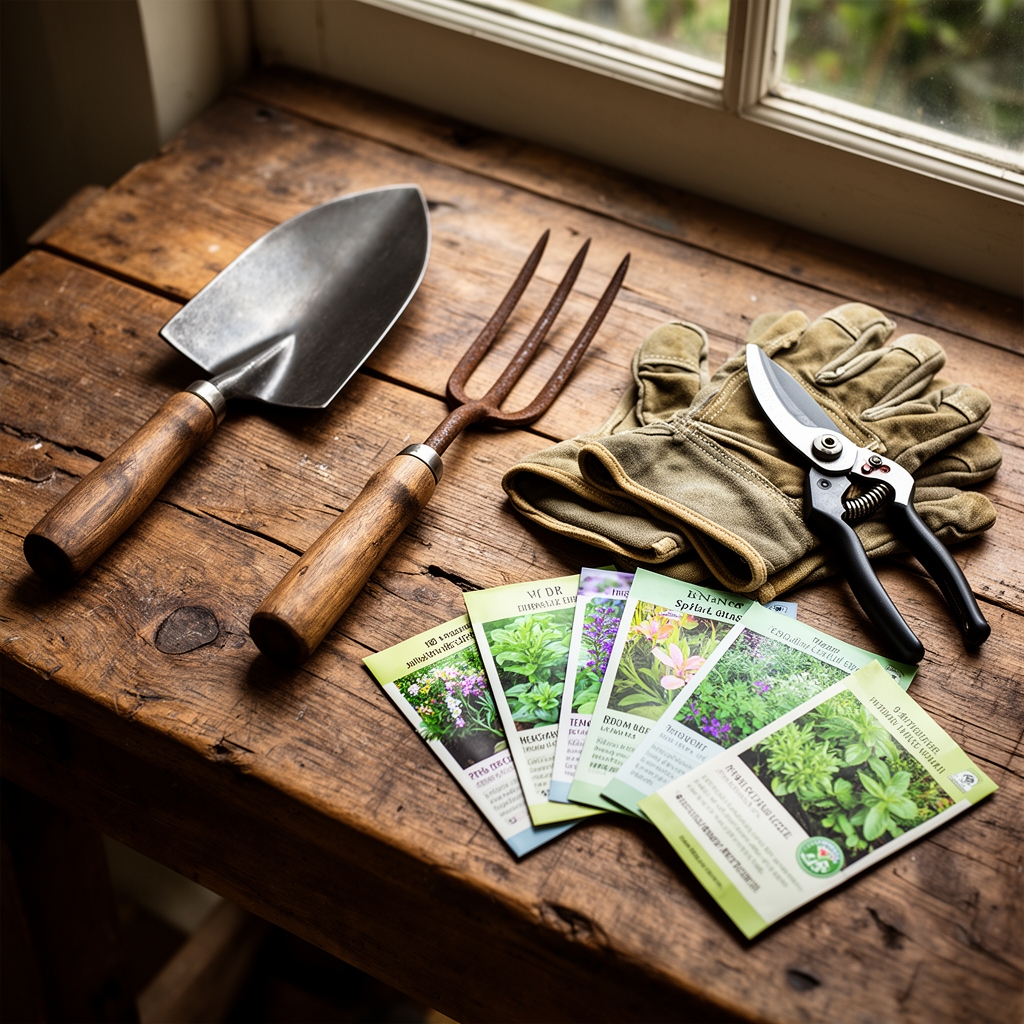
The foundation requires approximately 200 pounds of stone or urbanite (recycled concrete) in mixed sizes ranging from 4 to 12 inches. Select materials with thermal mass sufficient to moderate diurnal temperature swings by 8 to 12 degrees Fahrenheit. Avoid limestone if acid-loving herbs such as rosemary are planned for the upper tiers.
Soil amendments must address the pH gradient. The spiral's apex receives a blend of 60% native soil, 30% coarse sand (particle size 0.5 to 2.0 millimeters), and 10% aged compost. This mixture achieves a pH of 6.8 to 7.2 and establishes rapid drainage essential for Mediterranean species. The base transitions to 50% native soil, 20% peat or coir, and 30% compost, lowering pH to 6.0 to 6.5 while increasing water retention by approximately 35%. Apply a 4-4-4 organic fertilizer at 2 pounds per 10 square feet during initial bed preparation. The balanced NPK ratio supports both leafy herbs and flowering varieties without excess vegetative growth.
Additional materials include landscape fabric (optional, for perennial weed suppression), a water source positioned at the spiral's base, and granular mycorrhizal inoculant at 1 ounce per 5 cubic feet of soil. The fungi colonize root systems within 14 days, extending nutrient uptake radius by 10 to 100 times.
Timing
Construct the spiral structure during late summer or early autumn in Hardiness Zones 5 through 8. This window allows stone and soil to settle through winter freeze-thaw cycles before spring planting. In Zones 9 through 11, build between November and January when rainfall assists soil consolidation without eroding fresh layers.
Plant perennial herbs 4 to 6 weeks before the first expected frost date. Roots establish while soil temperatures remain above 50 degrees Fahrenheit, providing cold hardiness for overwintering. Annual herbs transplant 2 weeks after the last spring frost when night temperatures stabilize above 45 degrees. Basil and other frost-sensitive species require soil temperatures of 60 degrees minimum.
Phases
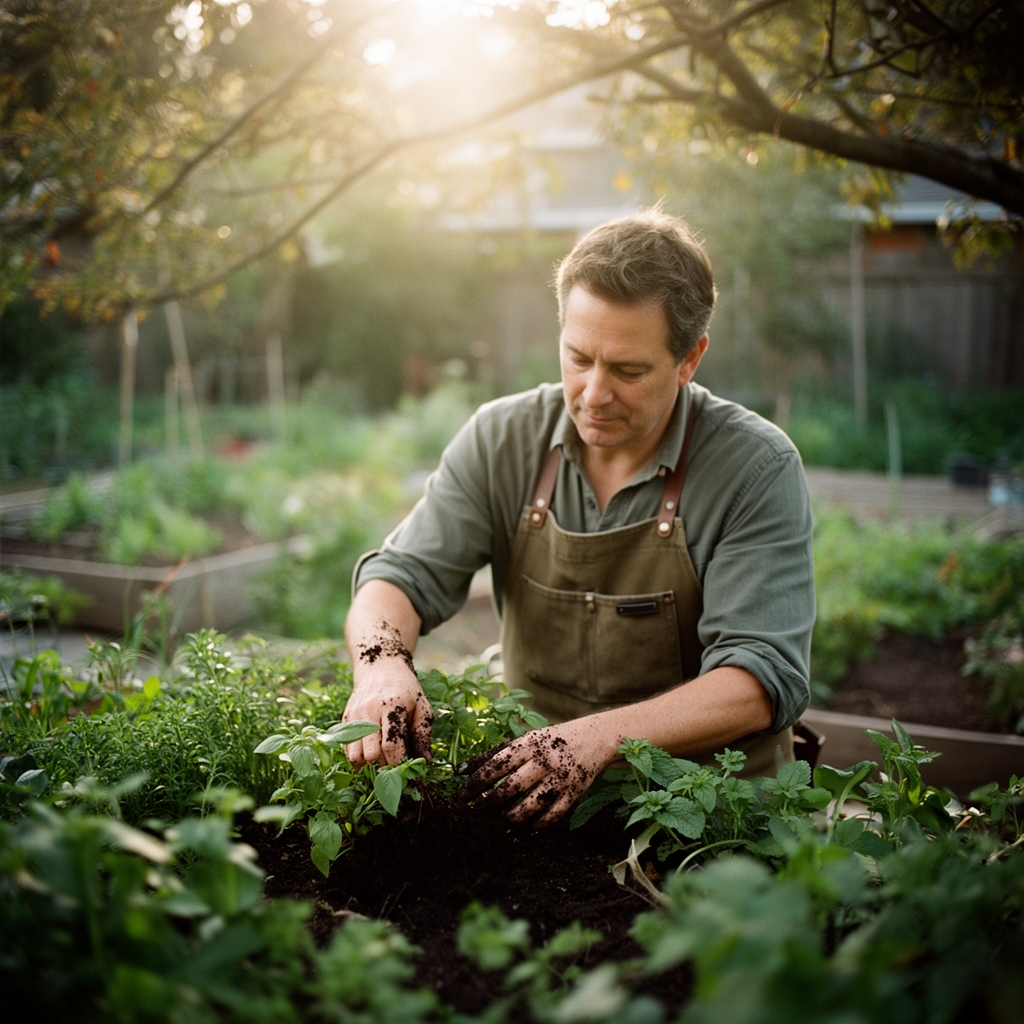
Sowing: Direct seed hardy annuals such as cilantro, dill, and chervil into the mid-spiral zones where moderate moisture and partial afternoon shade reduce bolting risk. Sow seeds at twice the normal density, then thin to final spacing of 6 inches once seedlings reach 2 inches in height. Germination occurs within 7 to 14 days at soil temperatures between 55 and 65 degrees Fahrenheit.
Pro-Tip: Inoculate leguminous herbs like fenugreek with Rhizobium bacteria at seeding to fix atmospheric nitrogen, contributing 30 to 50 pounds of nitrogen per acre annually.
Transplanting: Position woody perennials such as rosemary, thyme, and sage at the spiral's apex. Their tap roots penetrate the well-drained zone to depths of 18 to 24 inches. Space plants 12 to 18 inches apart to allow mature canopy spread. Mid-level zones accommodate oregano, marjoram, and summer savory with 10-inch spacing. Reserve the base for moisture-loving parsley, chives, and mint. Install mint within buried 12-inch plastic barriers to contain rhizomatous spread.
Pro-Tip: Prune new transplants at a 45-degree angle, removing the apical meristem to redirect auxin distribution laterally. This increases branching by 60% within three weeks.
Establishing: Water transplants with 1 gallon per plant immediately after installation. Apply a 2-inch layer of mulch (shredded bark or straw) around each herb, maintaining a 2-inch gap from stems to prevent crown rot. Monitor soil moisture daily for the first two weeks, then transition to the maintenance schedule. Root systems establish within 21 to 30 days, evidenced by new leaf growth and resistance to gentle tugging.
Pro-Tip: Foliar spray with kelp extract (diluted 1:500) every 10 days during establishment to supply cytokinins that accelerate root cell division.
Troubleshooting
Symptom: Yellow lower leaves with green veins on basil and parsley.
Solution: Iron chlorosis caused by pH above 7.5. Drench soil with chelated iron at 1 tablespoon per gallon. Incorporate sulfur at 1 pound per 100 square feet to lower pH by 0.5 units.
Symptom: Powdery white coating on sage and oregano foliage.
Solution: Powdery mildew thrives in humidity above 70% with poor air circulation. Prune interior branches to open canopy. Spray with 1 tablespoon baking soda plus 1 teaspoon horticultural oil per gallon weekly for three applications.
Symptom: Wilting rosemary despite dry soil.
Solution: Root rot from Phytophthora species. Remove affected plants and surrounding soil to a depth of 6 inches. Replace with fresh, unamended sand. Improve drainage by adding 1-inch diameter gravel beneath future plantings.
Symptom: Slug trails and irregular leaf margins on chives.
Solution: Apply diatomaceous earth in a 4-inch band around plant bases. Refresh after rain. Install copper tape barriers at the spiral's base where moisture accumulates.
Maintenance
Deliver 1 inch of water weekly to the spiral's base and 0.5 inches to the apex during active growth. Use drip irrigation to maintain soil moisture gradients without overhead wetting that encourages fungal disease. Test soil pH every 8 weeks using a calibrated meter. Adjust with dolomitic lime to raise or elemental sulfur to lower pH by increments of 0.5 units.
Harvest herbs before 10 a.m. when essential oil concentrations peak. Remove no more than one-third of foliage per cutting to sustain photosynthetic capacity. Side-dress perennials with compost at 0.5 inches depth each spring, avoiding contact with woody stems. Divide overcrowded plants every 3 to 4 years.
FAQ
How deep should a herb spiral be?
The base should rest 6 inches below grade to access subsurface moisture. The apex rises 30 to 36 inches above grade, creating sufficient elevation change for distinct microclimates.
Can I build a spiral on clay soil?
Yes. Excavate 8 inches and install a gravel drainage layer before filling with amended soil. Clay's high cation exchange capacity retains nutrients effectively once drainage is corrected.
Which herbs tolerate full shade?
Mint, parsley, chervil, and lemon balm grow successfully with 3 to 4 hours of direct sun. Position these at the spiral's northern base.
How long do herb spirals last?
Stone structures remain functional for 20-plus years. Soil amendments require replenishment every 3 to 5 years as organic matter mineralizes at 5% annually.
Do spirals work in containers?
Miniature versions function in containers 36 inches in diameter and 24 inches deep. Reduce stone size to 2 to 4 inches and increase watering frequency by 50% due to limited soil volume.