8 Best Ficus Benjamina Care Guide
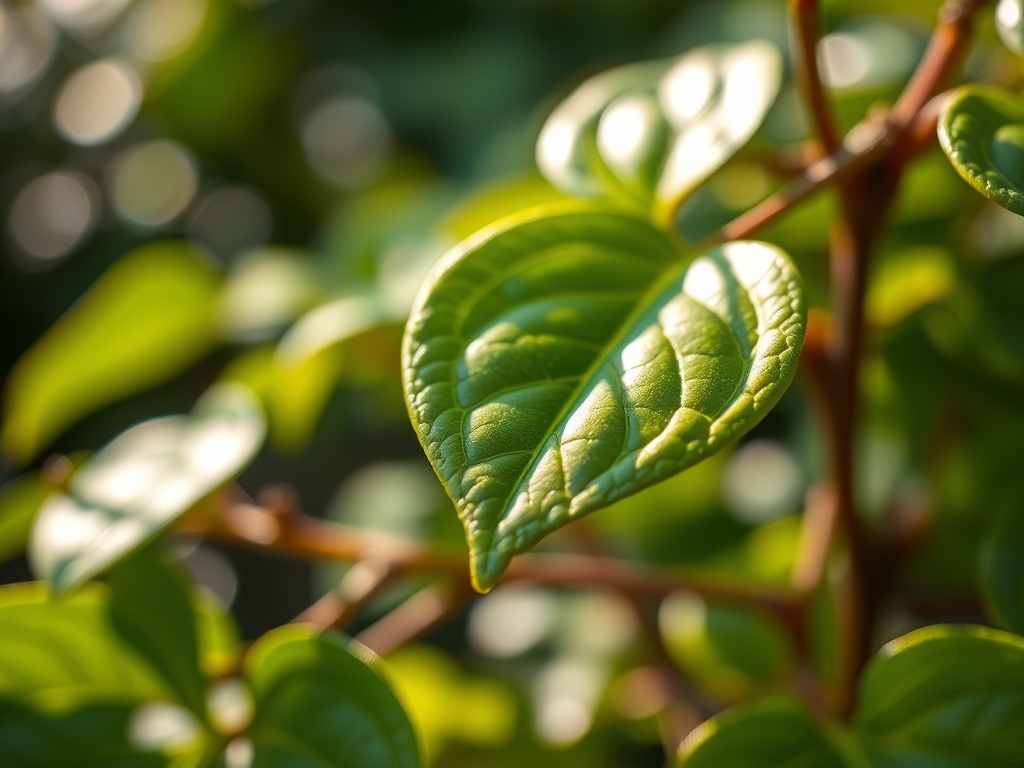
The Ficus benjamina drops leaves when moved from the greenhouse to your living room because its stomatal apparatus cannot adjust to rapid shifts in relative humidity and photon flux density. This behavior, encoded across millennia of evolutionary adaptation to Southeast Asian monsoon forests, makes the weeping fig one of the most responsive houseplants to environmental cues. Mastering the best ficus benjamina care guide requires understanding the species as a hemiepiphyte with specific light compensation points, water potential thresholds, and nutrient uptake patterns that differ markedly from terrestrial shrubs.
Materials
Substrate selection drives root morphology and cation exchange capacity. Formulate a mix of 40% pine bark fines (pH 5.5-6.2), 30% peat moss or coco coir, 20% perlite, and 10% worm castings. This combination provides adequate aeration porosity above 15% while maintaining water-holding capacity between 45-55% by volume.
For containerized specimens, use an organic granular fertilizer with an NPK ratio of 3-1-2 or 4-4-4. Products containing feather meal, bone meal, and kelp provide slow-release nitrogen without the salt accumulation common to synthetic formulations. Incorporate mycorrhizal fungi inoculant (Glomus intraradices or Rhizophagus irregularis) at potting to colonize 30-40% of root cortex tissue within eight weeks, improving phosphorus uptake efficiency by 200-300%.
Liquid supplementation during active growth phases should deliver micronutrients: chelated iron (Fe-EDTA) at 2-3 ppm, manganese at 0.5 ppm, and zinc at 0.3 ppm. Avoid formulations with urea nitrogen, which volatilizes rapidly in warm indoor conditions and creates ammonia accumulation in the root zone.
Timing
Ficus benjamina thrives outdoors year-round in USDA Hardiness Zones 10b-11, where minimum temperatures remain above 35°F. In Zones 9a-10a, move containers indoors when nighttime temperatures approach 45°F consistently, typically mid-November through early March.
Indoor cultivation extends range to any zone with controlled environments. Spring repotting coincides with the vernal equinox when increasing photoperiod triggers auxin distribution from apical meristems to lateral buds. This March 15-April 30 window in temperate zones allows root systems to establish before summer heat stress.
Avoid transplanting during short-day periods (October-February in the Northern Hemisphere) when carbohydrate reserves concentrate in structural tissues rather than new root initiation.
Phases

Establishment
Select nursery specimens with turgid leaves, white root tips visible at drainage holes, and internode spacing below 1.5 inches. Quarantine new acquisitions for 14 days in bright indirect light (150-250 foot-candles) to monitor for thrips, scale, or spider mites before integrating with other specimens.
Upon transplanting, maintain root ball integrity. Score circling roots with a sterile blade at four equidistant vertical lines, 1/4 inch deep, to redirect growth vectors outward. Water thoroughly until substrate reaches field capacity, then allow the top 2 inches to dry before the next irrigation cycle.
Pro-Tip: Apply rooting hormone containing 0.1% indole-3-butyric acid (IBA) to scored root surfaces. This stimulates adventitious root proliferation within 10-14 days and reduces transplant shock by 40%.
Growth Phase
Position plants where they receive 200-400 foot-candles for 12-14 hours daily. South or west-facing windows filtered through sheer curtains provide adequate photosynthetically active radiation (PAR) in the 400-700 nanometer spectrum. Rotate containers 90 degrees weekly to prevent phototropic leaning and ensure uniform canopy development.
Feed every 21 days during active growth with diluted liquid fertilizer at half the manufacturer's recommended concentration. Flush the substrate with clear water every fourth irrigation to prevent soluble salt accumulation above 2.0 dS/m (measured via electrical conductivity).
Pro-Tip: Prune terminals at 45-degree angles just above nodes during late spring. This angle maximizes cut surface area for callus formation while minimizing water accumulation that promotes Botrytis colonization.
Maintenance Phase
Once specimens reach desired architecture, shift focus to canopy density rather than vertical extension. Pinch soft new growth every 6-8 weeks to encourage lateral branching and increase leaf area index. Remove no more than 20% of total leaf mass per pruning session to avoid triggering stress-response abscission.
Pro-Tip: Apply neem oil (azadirachtin 0.5%) as a soil drench at 2 tablespoons per gallon every 60 days. Systemic uptake provides 4-6 weeks of protection against piercing-sucking insects while supporting beneficial soil microbiome populations.
Troubleshooting
Symptom: Widespread leaf drop within 7-10 days of relocation.
Solution: Environmental shock response. Maintain consistent temperature (68-78°F), humidity (40-60%), and light intensity for 3-4 weeks. New foliage emerges after acclimation period.
Symptom: Interveinal chlorosis on young leaves.
Solution: Iron deficiency induced by alkaline substrate (pH above 7.0). Apply chelated iron foliar spray at 150 ppm and amend soil with sulfur to lower pH to 6.0-6.5.
Symptom: Brown leaf margins with crispy texture.
Solution: Salt burn from fertilizer accumulation. Leach substrate with distilled water at 2x container volume. Resume feeding at quarter strength.
Symptom: Sticky honeydew on leaves and stems.
Solution: Scale insect infestation. Remove visible insects with isopropyl alcohol swabs. Apply horticultural oil at 2% concentration, ensuring complete coverage of leaf undersides.
Symptom: Sudden branch dieback with dark streaking.
Solution: Anthracnose fungal infection. Prune affected tissue 3 inches below visible damage. Improve air circulation and reduce foliar wetness.
Maintenance
Water when the top 2 inches of substrate register dry to touch, typically every 5-7 days in summer, 10-14 days in winter. Apply 1 inch of water per irrigation event, measured by volume (0.62 gallons per square foot of surface area). Maintain relative humidity between 50-60% using pebble trays or room humidifiers during heating season when indoor air commonly drops below 30%.
Monitor for spider mites weekly by inspecting leaf undersides with 10x magnification. Early detection at population densities below 5 mites per leaf allows control with forceful water spray rather than miticides.
FAQ
How much light does Ficus benjamina require?
Provide 200-400 foot-candles of indirect light for 12-14 hours daily. Insufficient light causes internode elongation and sparse foliage.
Why do leaves turn yellow and drop?
Overwatering creates anaerobic root zone conditions. Allow substrate to dry 2 inches deep between waterings. Root rot requires repotting into fresh media.
Can I grow Ficus benjamina from cuttings?
Yes. Take 4-6 inch semi-hardwood cuttings in late spring. Dip in rooting hormone and place in sterile propagation mix. Rooting occurs in 3-4 weeks at 75-80°F with 80% humidity.
How often should I fertilize?
Apply balanced organic fertilizer (3-1-2 or 4-4-4) every 21 days March through September. Reduce to every 60 days October through February when growth slows.
What temperature range is optimal?
Maintain 68-78°F daytime, 60-65°F nighttime. Temperatures below 50°F cause leaf drop and potential tissue damage. Avoid placement near heating vents or drafty windows.