5 Simple Steps to Make Keyhole Beds
The first time you press a spade into cool soil to outline the circular footprint of a keyhole garden, you smell the iron and humus rising from disturbed earth. The steps to make keyhole beds transform a flat lawn into a self-feeding, warm-composting system that resembles an African relief project scaled to a suburban backyard. Each layer you add builds cation exchange capacity. Each stone you set defines a microclimate. Within six weeks, the bed will support crops while digesting kitchen scraps through a central basket that accelerates mineralization and auxin distribution to every root within arm's reach.
Materials
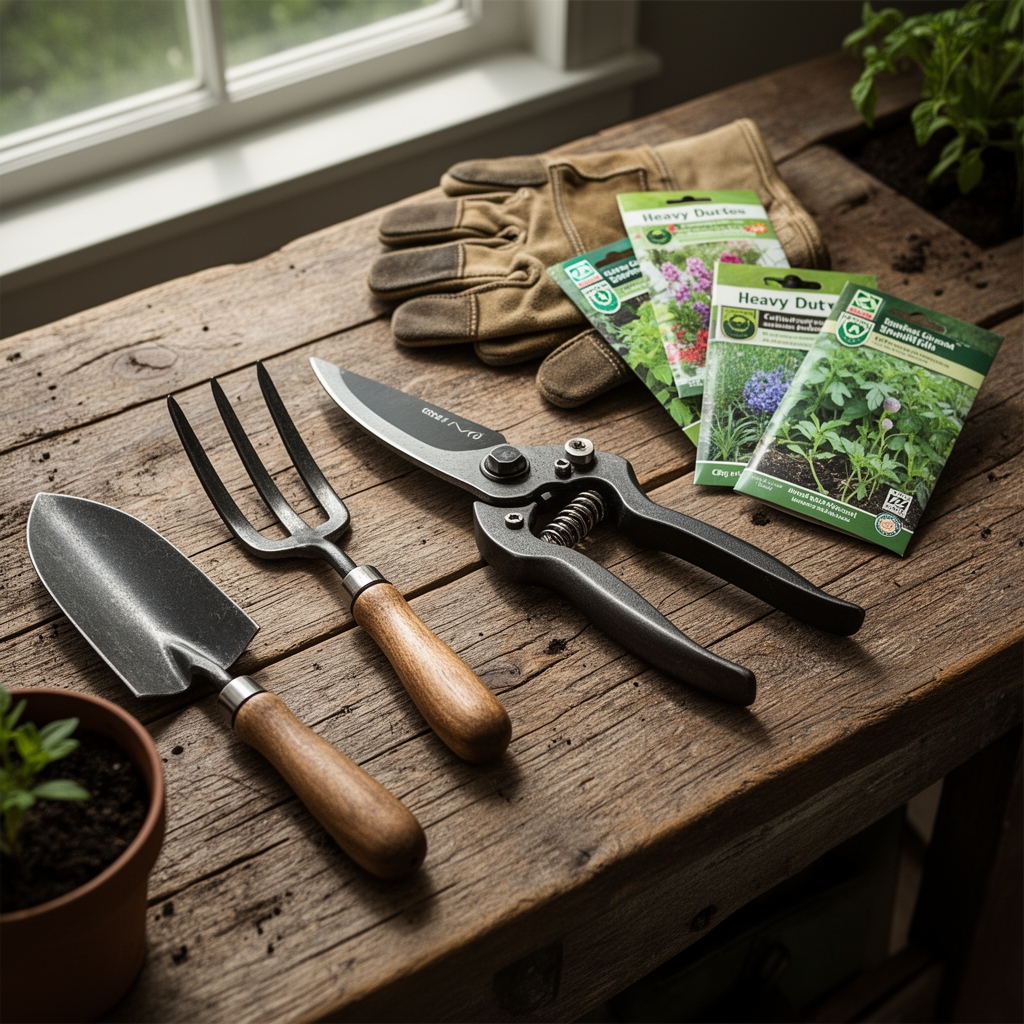
Gather materials according to their chemical contribution and structural role. For the perimeter wall, collect weathered brick, stacked stone, or untreated lumber at least 36 inches tall. Stone holds heat and moderates pH drift better than wood.
Acquire 12 cubic feet of coarse compost with an NPK ratio near 1-1-1 and a C:N ratio below 25:1. Add 6 cubic feet of aged manure, ideally sheep or rabbit, testing around 3-2-2 and rich in soluble calcium. Layer in 4 cubic feet of peat moss or coir to lower pH by 0.3 to 0.5 units if your native soil tests above 7.2. Include 2 cubic feet of perlite or coarse sand to maintain 40 percent pore space in the final mix.
For the central compost basket, use welded wire fencing with 2-inch openings, forming a cylinder 24 inches in diameter and 36 inches tall. The basket requires ventilation holes every 6 inches at vertical intervals to promote aerobic thermophilic breakdown. Stock a 50-pound bag of 4-4-4 organic meal blended from feather meal, bone meal, and kelp to inoculate each new kitchen-scrap addition with balanced macronutrients. Purchase ectomycorrhizal and endomycorrhizal fungi granules, 8 ounces total, to colonize root hairs during the establishment window.
Timing
Construct keyhole beds four to six weeks before the last spring frost date in Zones 5 through 9. In Zone 5, that window opens mid-April. In Zone 9, begin in late January. The lag allows microbial populations to stabilize and aggregates to form before transplanting stress-sensitive seedlings.
Fall construction works in Zones 7 and warmer. Build in September or October, cover the bed with 4 inches of shredded leaves, and let freeze-thaw cycles integrate organic matter. By March, the bed will have undergone two complete wetting and drying cycles, doubling its water-holding capacity compared to a spring-built analog.
Phases
Mark a circle 6 feet in diameter on level ground. Remove sod to a depth of 2 inches and reserve it upside down at the perimeter. Excavation exposes mineral soil and eliminates competitive grass rhizomes.
Sowing the Foundation
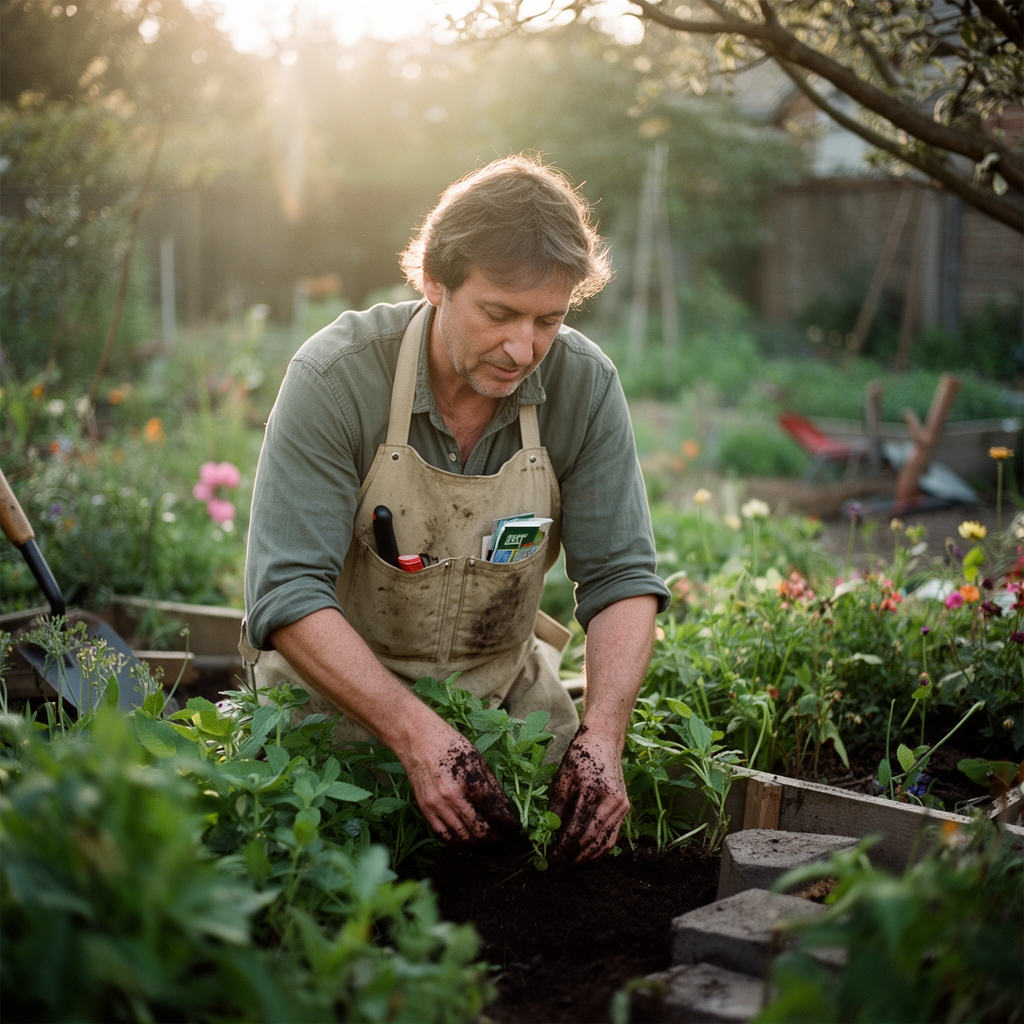
Lay the first course of stone or brick in a keyhole shape: a full circle with a 24-inch-wide pathway notch extending from perimeter to center. The pathway allows you to reach the compost basket without compacting planted zones. Stack subsequent courses, staggering joints, until the wall reaches 32 to 36 inches. Backfill against the inner wall with inverted sod, then add a 4-inch layer of coarse compost.
Pro-Tip: Tilt each stone 5 degrees inward to create a battered wall. This angle increases structural stability and funnels rain toward plant roots rather than away from the bed.
Transplanting Layers
Alternate 3-inch layers of compost, manure, peat, and native soil until the bed interior sits 28 inches above grade. Water each layer with 2 gallons to settle voids and initiate aggregation. Position the wire basket in the geometric center, pressing it 4 inches into the layered media. Backfill around the basket with pure compost to ensure rapid leachate infiltration.
Pro-Tip: Inoculate the root zone 8 inches below the surface with mycorrhizal granules at a rate of 1 teaspoon per square foot. Fungal hyphae extend effective root reach by 40 percent within 30 days.
Establishing the Ecosystem
Plant seedlings in concentric rings 12 inches from the basket edge, spacing according to mature canopy diameter. Transplant on an overcast afternoon to reduce transpiration shock. Mulch with 2 inches of straw, keeping it 3 inches clear of stems to prevent collar rot. Add 8 pounds of mixed kitchen scraps to the basket every three days. Scraps heat to 130 degrees Fahrenheit within 48 hours, releasing nitrogen and phosphorus through the basket walls.
Pro-Tip: Prune determinate tomato suckers at a 45-degree angle just above the second leaf node. This promotes auxin flow to fruiting trusses and reduces apical dominance.
Troubleshooting
Symptom: Yellowing lower leaves with green veins. Solution: Interveinal chlorosis indicates iron deficiency common in pH above 7.5. Drench soil with chelated iron at 1 tablespoon per gallon weekly until new growth emerges dark green.
Symptom: Wilting at midday despite moist soil. Solution: Root-knot nematodes disrupt vascular flow. Remove affected plants, solarize the bed under clear plastic for six weeks in summer heat, and replant with marigold trap crops.
Symptom: White powdery coating on leaf surfaces. Solution: Powdery mildew thrives in humidity above 60 percent with poor air circulation. Spray a 0.5 percent potassium bicarbonate solution at sunrise every five days. Prune interior foliage to increase airflow.
Symptom: Blossom end rot on tomatoes and peppers. Solution: Calcium transport fails under erratic watering. Apply 1 inch of water every three days. Side-dress with gypsum at 2 tablespoons per plant to raise available calcium without altering pH.
Maintenance
Deliver 1 inch of water twice weekly during active growth, measured with a rain gauge placed at bed center. Increase to 1.5 inches in fruiting stages when transpiration peaks. Top-dress the bed surface with 0.5 inches of finished compost monthly to maintain 4 percent organic matter by volume. Rotate the basket contents with a garden fork every ten days to aerate thermophilic zones and prevent anaerobic pockets. Harvest leachate pooling at the basket base and dilute it 1:4 before foliar feeding.
FAQ
How long does a keyhole bed last?
Stone-walled beds function for 15 years before requiring structural repair. Organic matter mineralizes at 5 percent annually, so top-dress to replace mass.
Can I build on a slope?
Yes. Excavate the uphill side deeper to create a level planting surface, and use the excavated soil to build up the downhill wall.
What crops perform best?
Heavy feeders such as tomatoes, squash, and kale thrive. Their root systems exploit the nutrient gradient radiating from the basket.
Do I need to turn the compost basket?
Turning every ten days prevents methane production and accelerates the shift from mesophilic to thermophilic bacteria.
How do I winterize the bed?
Mulch with 6 inches of shredded leaves in late October. Plant a cover crop of winter rye at 2 ounces per 10 square feet to scavenge residual nitrogen.